Hazardous Goods Storage Containers
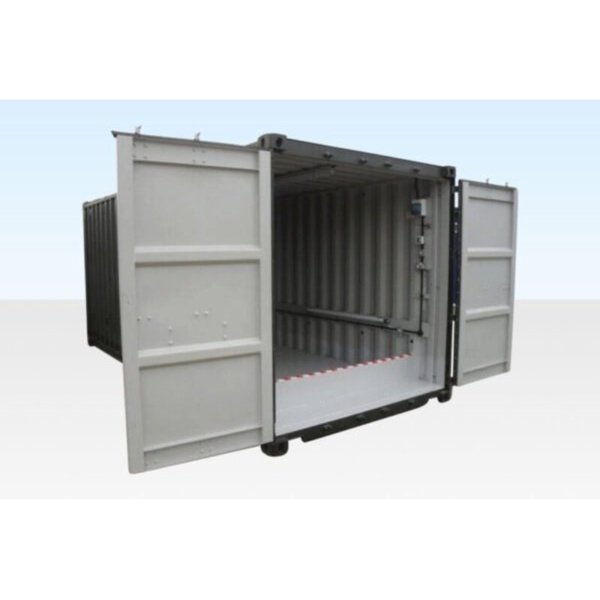
Keeping drums, IBCs or chemical stock outdoors comes with one non-negotiable requirement: whatever leaks has to stay inside the unit. An ordinary container floor cannot: a plywood deck on steel crossmembers passes liquid straight to the ground. Each of these is built over a sealed sump instead, so a split drum becomes a clean-up job rather than a pollution incident. They are bunded storage containers first and containers second.
Three units, two footprints
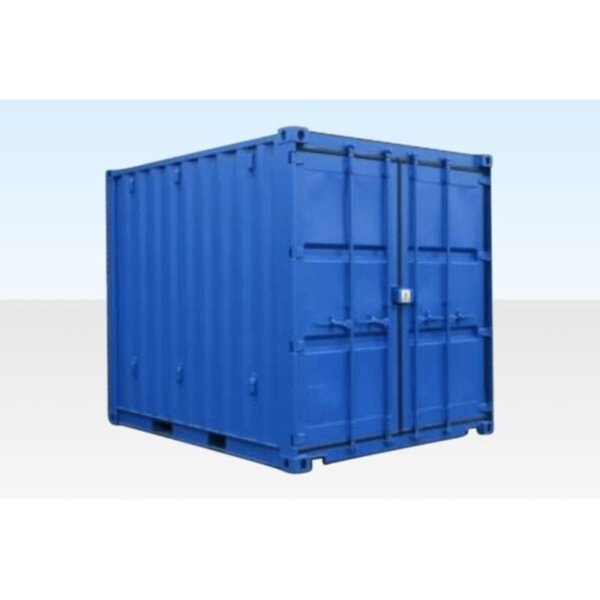
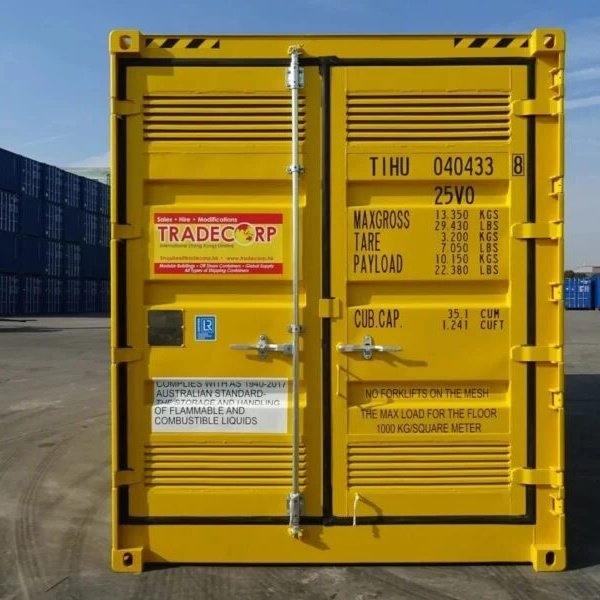
The choice here is deliberately short. A 10ft raised bunded store occupies 3.0m × 2.4m (10ft × 8ft) of ground and suits a modest quantity on a tight plot. The 20ft raised bunded store doubles that to 6.1m × 2.4m (20ft × 8ft), taking the containment volume beneath the deck up with it. Both are new build, the raised deck sitting above the sump so anything that escapes drains clear of what is stored on top. Alongside them is the 20ft hazardous goods container, for dangerous goods duty where ventilation and segregation count for as much as liquid containment. Flat floor and open mesh bunded stores in the same footprints are catalogued with the general storage range.
Sizing the sump follows the regulator rather than the product. Which rules bite depends on what you store, how much of it and where the site is, so check what applies with the environmental regulator or your council first, then work backwards from the containment volume you must provide.
Bunded work is fabrication, so it carries 12 months on workmanship. A unit built to order needs 2 to 6 weeks; anything held as stock runs closer to the 7 to 10 day estimate applying across the site. Every date is an estimate, not a promise. Delivery is free UK-wide, Northern Ireland, the Isle of Man, Jersey and Guernsey included, and no VAT is added at checkout — the listed price is what you pay. Gas cylinder stores and explosive magazines sit under specialist containers. Already have the specification? Send it over and we will point you at the right unit.
Showing all 3 results