
Description
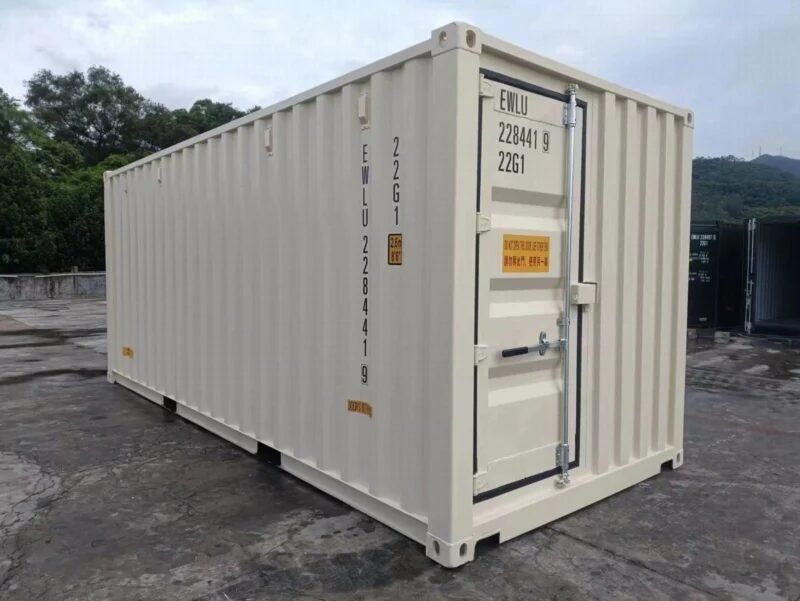
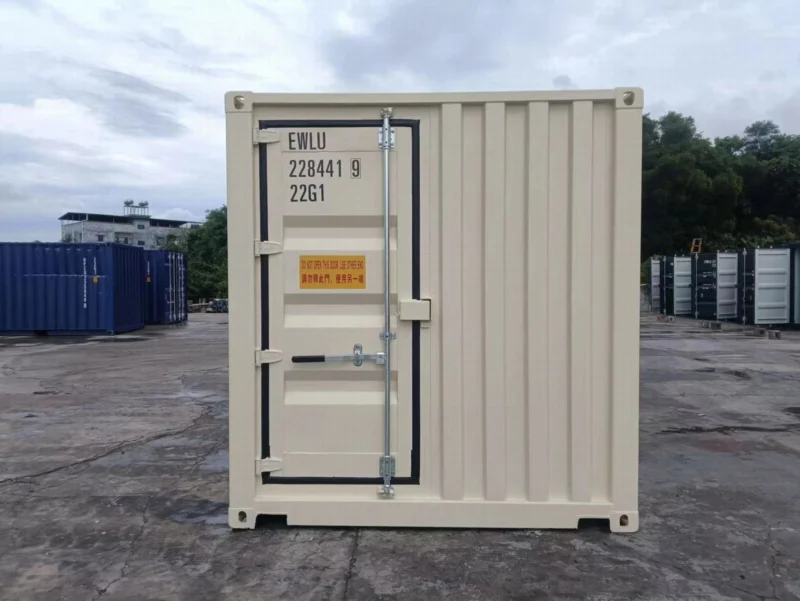
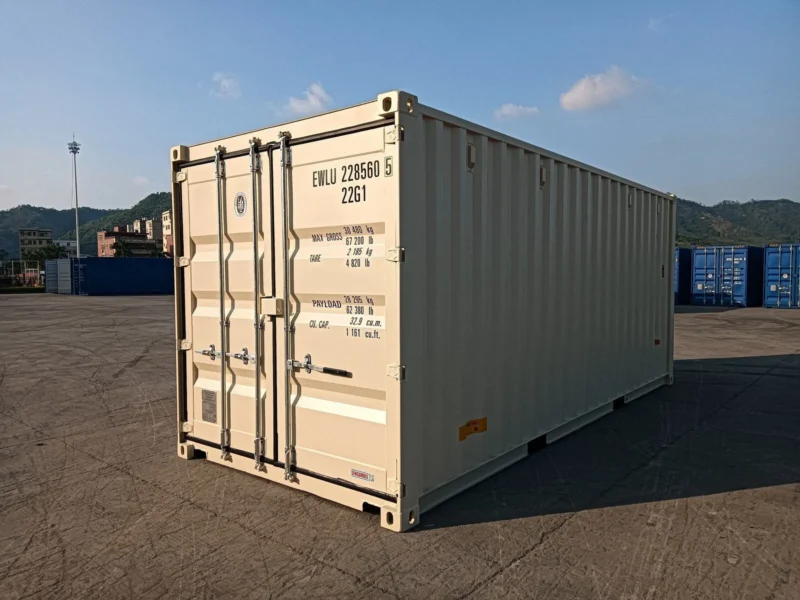
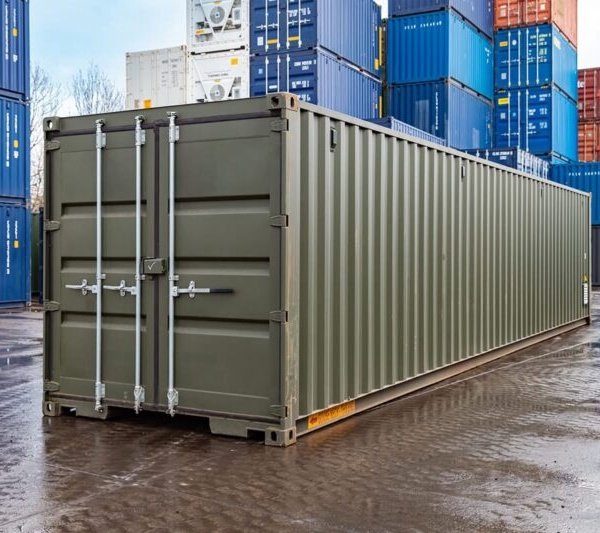
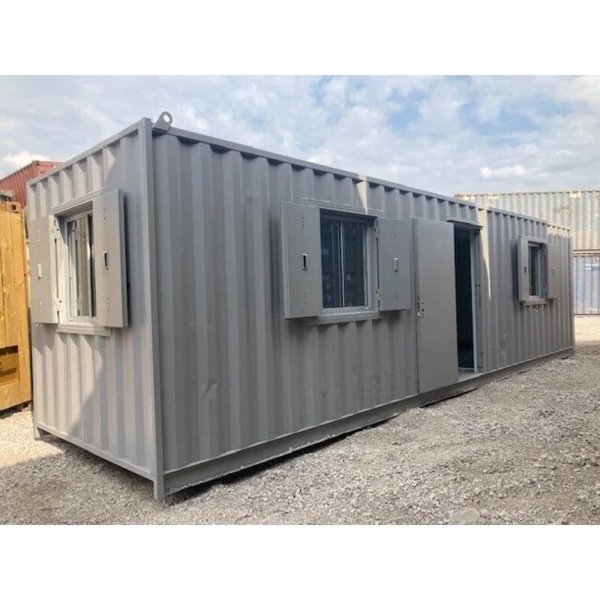
Version A of our 20ft triple-door build: a one-trip shell with hinged double cargo doors at one end and a separate single door in the opposite end panel. One-trip means the container was manufactured, loaded once, shipped once and then sold, so it arrives with straight panels, an unmarked marine plywood floor and door hardware that has been operated a handful of times. The reason to pay for this layout rather than a standard box is simple: two openings at opposite ends turn a container from a place things are stacked into a space that can actually be worked in.
Key dimensions
- External: 6.06 × 2.44 × 2.59 m (19 ft 11 in × 8 ft 0 in × 8 ft 6 in)
- Internal: 5.90 × 2.35 × 2.39 m (19 ft 4 in × 7 ft 9 in × 7 ft 10 in)
- Cargo end opening: 2.34 m wide × 2.28 m high (7 ft 8 in × 7 ft 6 in)
- Second door: single hinged leaf in the far end panel
Specification
- One-trip Cor-Ten weathering steel container, white finish
- Twin locking bars on each cargo door leaf
- Single access door at the opposite end
- Marine-grade plywood floor over steel cross members
- Wind and watertight with new door seals
- Forklift pockets both sides; ISO corner castings retained
Two openings doing two different jobs
The cargo doors exist for bulk: forklift work, pallets, plant, anything needing the full 2.34 m width. The single door exists for people. Splitting those jobs across opposite ends is what makes the unit workable through a shift — nobody has to unbar and swing a pair of cargo doors to collect one item, and the main seal stays closed against wind and rain for most of the working day.
There is a through-draught benefit too. With both ends open the container ventilates properly, which matters when it has been shut up in warm weather or when damp goods have just gone in. And because the cargo end can face away from foot traffic, the unit can be positioned with its back to a boundary and still be entered.
Siting and security notes
- One-trip door gear closes properly from the outset — a point worth checking on any used alternative
- A lockbox and closed-shackle padlock are the usual first addition on an open site
- The unit can sit tight to a fence at the cargo end provided the personnel end stays clear
- Both openings should be reachable when you mark out the pitch, not just the cargo end
Getting it to you
UK delivery is free, and that includes Northern Ireland, the Isle of Man, Jersey and Guernsey. The figure on the page is the whole figure — no VAT is added at checkout. Stock sits at depots around the country and the nearest suitable unit is allocated to your postcode, so a mainland England and Wales delivery normally falls in the 3 to 7 working day band; Scottish and island destinations run longer. A 20ft container arrives on a tilt-bed lorry and needs firm level ground plus a clear straight approach; where a crane offload is the only way onto the pitch, that has to be agreed in writing before the delivery is booked.
One-trip units carry 12 months of cover for structural defects and water ingress. That sits alongside, and does not replace, your statutory position: 14 days to cancel under the Consumer Contracts Regulations 2013, and a separate 30-day right to reject faulty goods under the Consumer Rights Act 2015.
Alternatives worth pricing
The Version B unit is the same configuration on a separate shell. For cargo doors at both ends rather than a personnel door, see the 20ft one-trip tunnel container; for the lowest-cost route where one opening is enough, the standard 20ft one-trip container. Our condition guide sets out how one-trip compares with cargo-worthy stock, and the full range sits under shipping containers.
Reviews
There are no reviews yet.