
Description
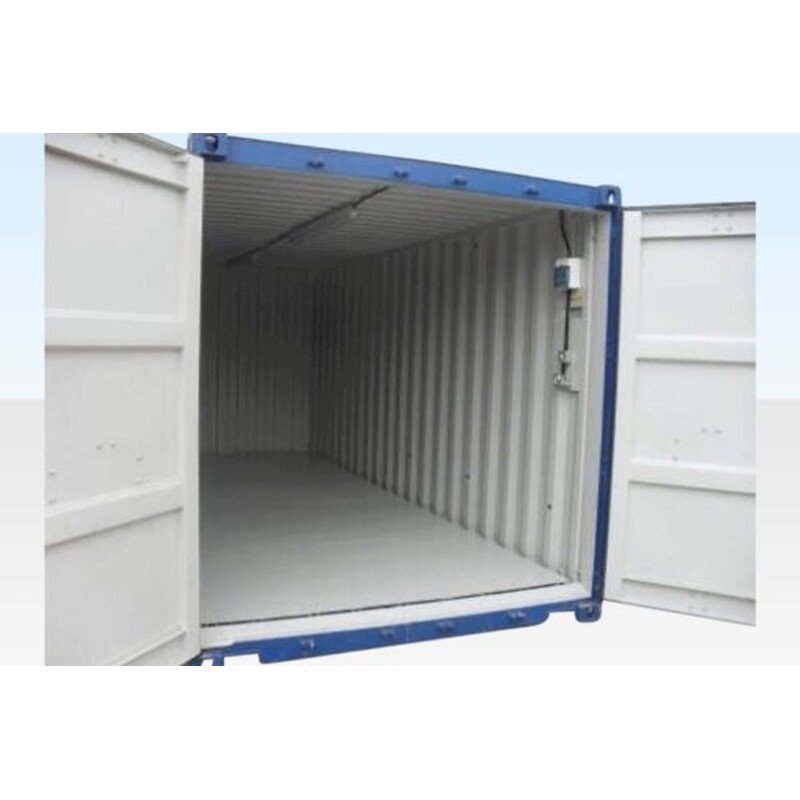
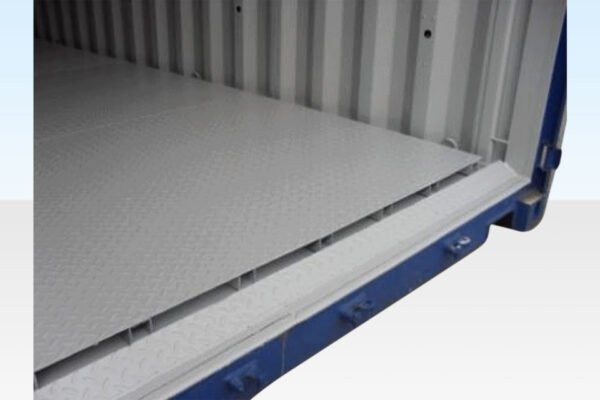
Some things must never reach the ground, and that requirement is the whole argument for a bunded store. This one begins as a one-trip 20ft shell and gains a 3 mm Durbar tread plate floor, welded in so the base becomes a sealed tray rather than a liner laid on it. A split drum or a weeping valve empties into the container, not out under the door seals and into the nearest gully.
Dimensions
- External: 6.06 × 2.44 × 2.59 m (19 ft 10 in × 8 ft 0 in × 8 ft 6 in)
- Internal: 5.84 × 2.35 × 2.39 m (19 ft 2 in × 7 ft 9 in × 7 ft 10 in)
- Door opening: 2.34 m wide × 2.28 m high (7 ft 8 in × 7 ft 6 in)
- Weight: 2,460 kg
- Floor: welded steel bunded floor
Build and fittings
- New one-trip container as the base, not a second-hand shell
- Containment floor formed from 3 mm Durbar tread plate, welded into the structure
- Flat across the whole span, so a pallet truck or a drum trolley goes straight through the doors
- Through-ventilation provided by 24 vents
- Cor-Ten weathering steel shell
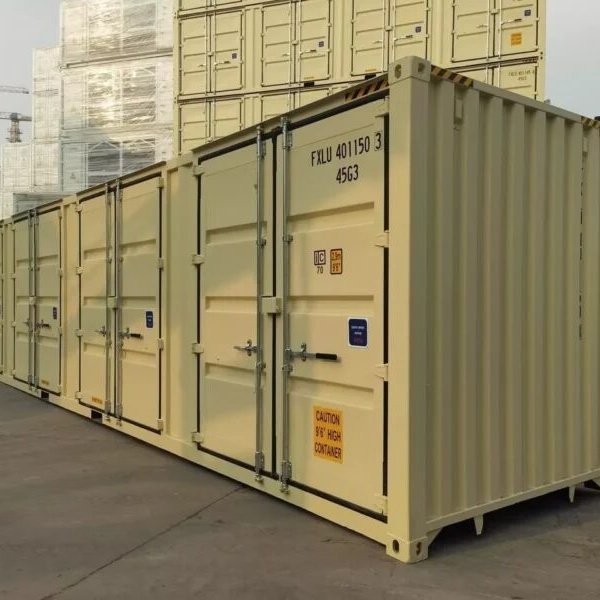
- Externally hinged double doors carrying two locking bars
- Lockbox fitted at the works
- Forklift pockets
Flat floor or raised floor: the choice that matters
A flat-floor bund keeps the full internal height and gives you a level surface to wheel drums across or drive a pallet truck onto. Day-to-day handling is markedly easier than with a raised grated floor, and that is why drummed chemicals and oils in regular circulation nearly always end up on a flat floor.
The trade-off is that stored goods sit in the containment area rather than above it. If a leak occurs, the drums stand in whatever has escaped. Where you expect to store already-leaking containers, or where the stored substance would damage the packaging of everything around it, a raised or open-mesh floor that lifts the load clear of the sump is the better specification.
Containment volume, ventilation and signage requirements depend on what you are storing and on the regulations that apply to it. Tell us the substance and we will confirm the specification before you order rather than after.
What it is used for
Drummed oils, lubricants and solvents; agrochemical and fertiliser stores on farms; fuel and additive storage on plant yards; workshop chemical stores; and any location where a spill reaching a surface water drain would be a reportable incident.
Delivery, siting and cover
Delivery is free across the UK, including Northern Ireland, the Isle of Man, Jersey and Guernsey, and the price shown is the total payable with no VAT added at checkout. At 2,460 kg the bund plate makes this heavier than a plain 20ft unit, and level siting is more critical than usual: a bund only holds its rated volume if the floor is genuinely level, so the base preparation is part of the specification rather than an afterthought. Tilt-bed delivery is standard; HIAB or crane offload is agreed in writing before delivery. Allow 2 to 6 weeks, as bunded units are made to order.
The one-trip shell carries our 12-month warranty against structural defects and water ingress, and the bund fabrication carries 12 months on workmanship. You also have 14 days to cancel under the Consumer Contracts Regulations 2013 and a separate 30-day right to reject the goods if faulty.
Choosing the right bunded store
Storing drums that already weep, or wanting any escape to drain away from the goods themselves, points to a different floor. Our 20ft raised bunded store holds the load above the sump, as does the 20ft open mesh floor bunded store. Name the substance on the quote form and we will tell you which floor suits it. Other secure units appear under storage containers.
Reviews
There are no reviews yet.