
Description
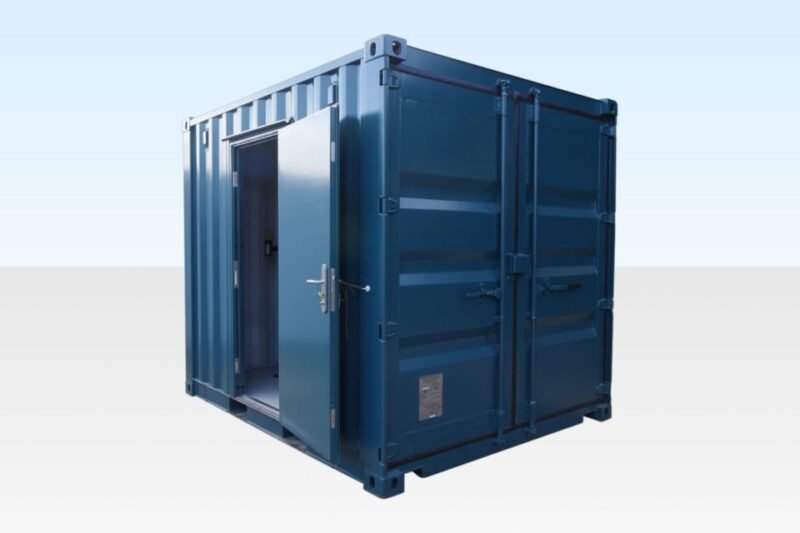
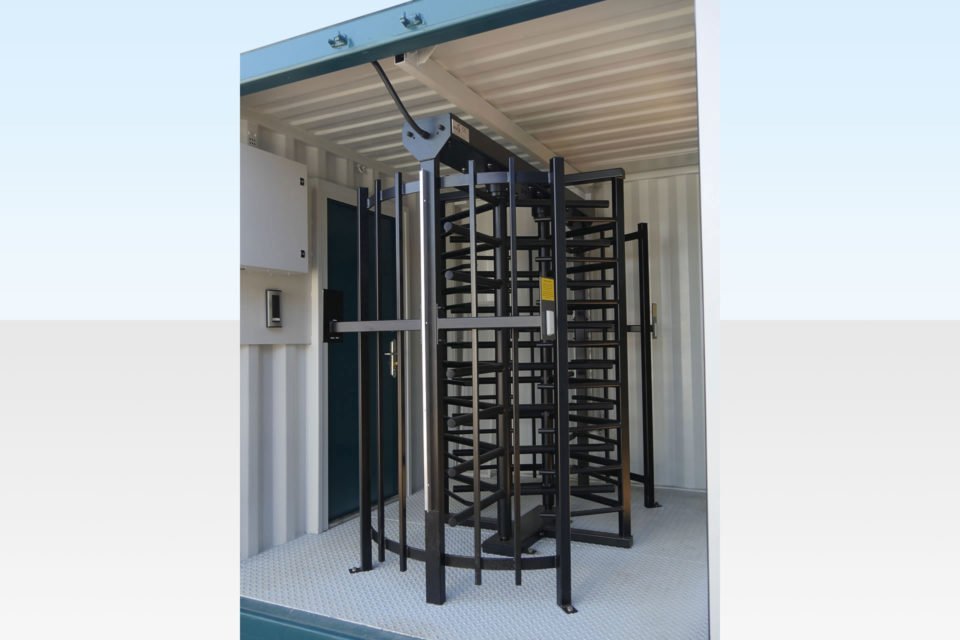
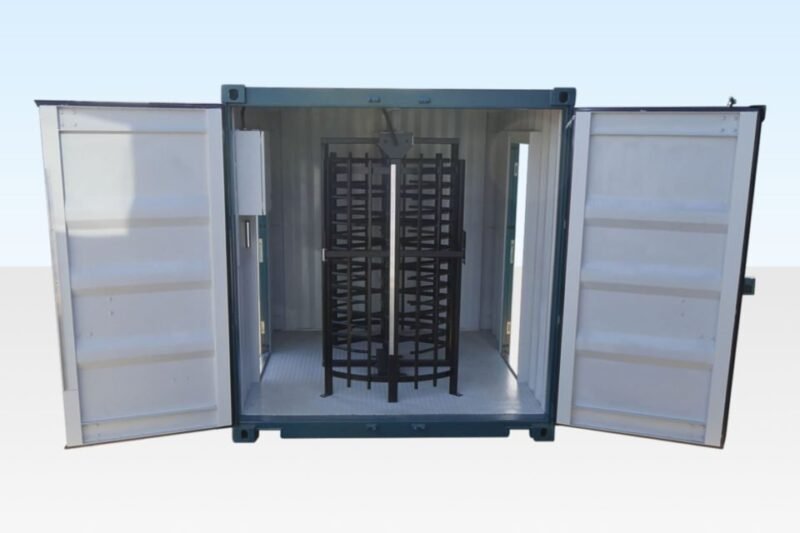
Entry and exit handled by one steel module, with a dedicated in lane and a dedicated out lane running alongside each other. Sites of any size meet the limitation of a single lane at the same two moments each day: everybody arrives, then everybody leaves. Lanes pointing in opposite directions absorb a shift change instead of pushing the tail of the queue back out onto the public road.
Dimensions
- External: 2.991 × 2.438 × 2.591 m (9 ft 10 in × 8 ft 0 in × 8 ft 6 in)
- Internal: 2.84 × 2.35 × 2.39 m (9 ft 4 in × 7 ft 9 in × 7 ft 10 in)
- Opening: 2.34 m wide × 2.28 m high (7 ft 8 in × 7 ft 6 in)
- Floor: 28 mm marine plywood
Specification
- One-way-in and one-way-out lanes side by side within a single module
- Steel throughout, specified for a gate that sees constant traffic
- Arrives complete and drops into a hoarding or fence line without groundworks
- Interfaces with card readers and biometric systems already in use
- Built for large construction and infrastructure projects, airports, factories and event sites
- Suits any entrance where only inducted or certified people may pass
Access hardware is not included
Worth being explicit, because it is the thing people assume: the module is designed to be driven by whatever access control you already run, and the turnstiles can generally be connected to standard card systems or biometric entry software — but that hardware and software are not supplied with the unit and are integrated at your cost. If you have an existing system across several sites, that is an advantage rather than a limitation, since the gate joins the estate you already manage instead of becoming a second system to administer.
Why the gate becomes part of the perimeter
Because it arrives as a complete steel module, it is set at the site boundary and tied into hoarding and fencing without groundworks of any kind. Rather than leaving a gap in the perimeter, the access point becomes part of a line that stays unbroken — which is the difference between a controlled entrance and a doorway that somebody props open. All-steel construction is what lets it survive the knocks a busy gate takes over a multi-year project, and the auditable in-and-out record is what makes induction and certification checks enforceable rather than aspirational.
Delivery, siting and cover
Delivery is free throughout the UK, including Northern Ireland, the Isle of Man, Jersey and Guernsey, and no VAT is added at checkout, so the price shown is the total payable. This one has a sequencing consideration the other cabins do not: the module needs to be lifted into the boundary line, so plan the delivery around the hoarding programme — either before the run is closed up, or with a section left out for it. A HIAB or crane lift is agreed in writing before the delivery date. It sets down on level, load-bearing ground without foundations, but get the position right first time, since moving it later means opening the perimeter again. Cover is 12 months against structural defects and water ingress, and separately you have 14 days to change your mind under the Consumer Contracts Regulations 2013 and 30 days to reject the goods if they are faulty under the Consumer Rights Act 2015.
Related units
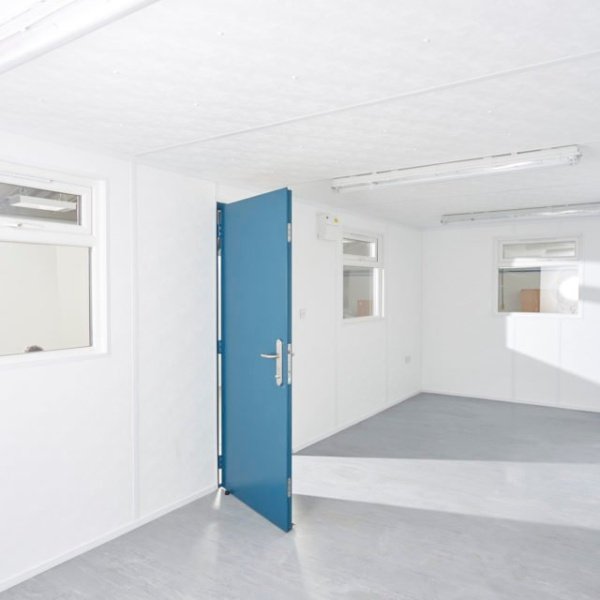
Where footfall is lower and there is one way in and out, the single turnstile unit is normally the right specification; the double earns its keep when both directions queue at the same moment. Gate installations often pair a turnstile module with somewhere for the security team to sit — a 16ft x 10ft site office jackleg cabin, typically. Browse the broader site cabin range and the modified container range, and ask for a quote so we can confirm lead time to your postcode.
Reviews
There are no reviews yet.