
Description
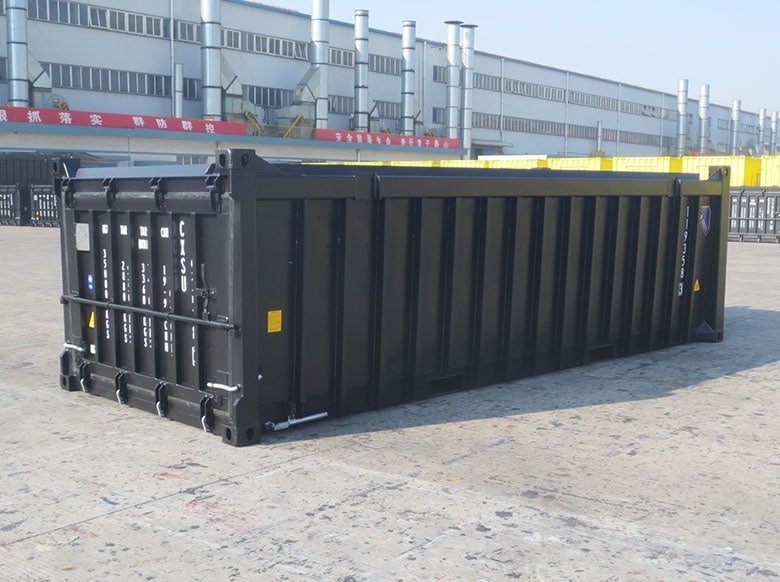
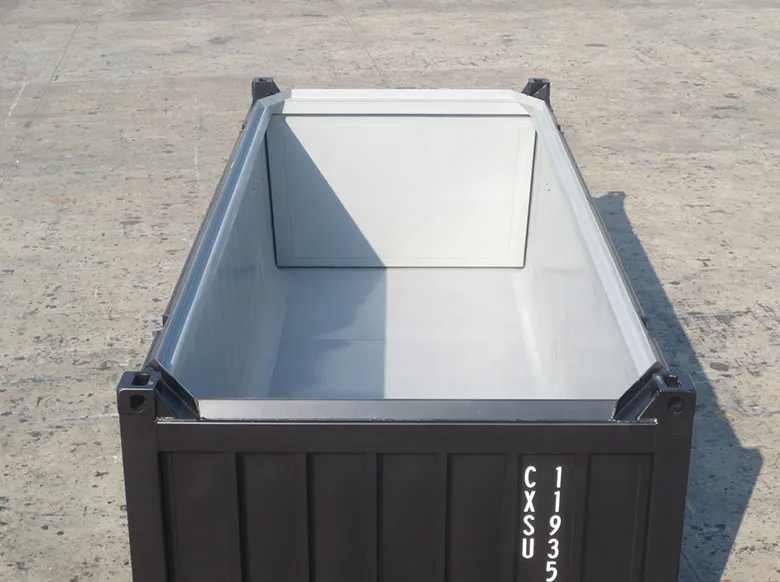
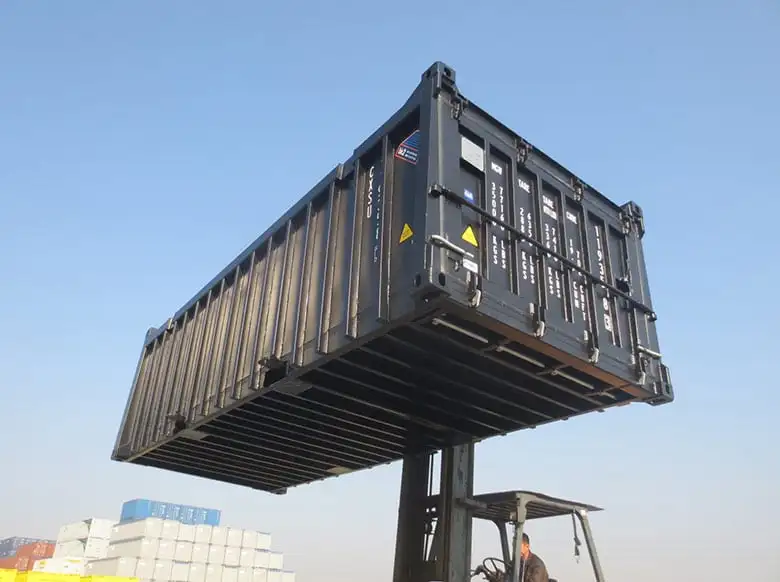
Half height open top containers built for the mining and construction industries, to store and move bulk products such as concentrates, sand, ore and other dense materials. The heavy-duty design and reduced side walls do two things at once: they give the container strength and they keep the loaded centre of gravity low, which is what makes handling and tipping a heavy bulk load manageable. At 35,470 kg of payload against a 2,530 kg tare, these are built around weight rather than volume.
Dimensions and ratings
- External: 6.058 × 2.438 × 1.450 m (19 ft 11 in × 8 ft × 4 ft 9 in)
- Internal: 5.844 × 2.287 × 1.202 m (19 ft 2 in × 7 ft 6 in × 3 ft 11 in)
- Top opening: 5.728 × 2.192 m (18 ft 10 in × 7 ft 2 in)
- Internal capacity: 16.1 m³ (567 cu ft)
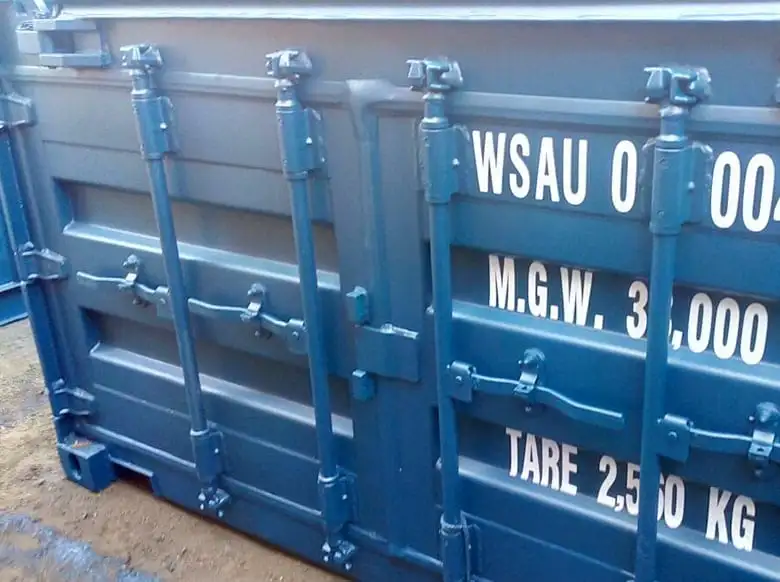
- Tare: 2,530 kg · max payload: 35,470 kg · max gross: 38,000 kg
Lid, discharge and handling
- Removable hard lid for easy loading and dust control in transit
- Lid built with a steel roof frame and panel, with seal gaskets and four roof locking mechanisms
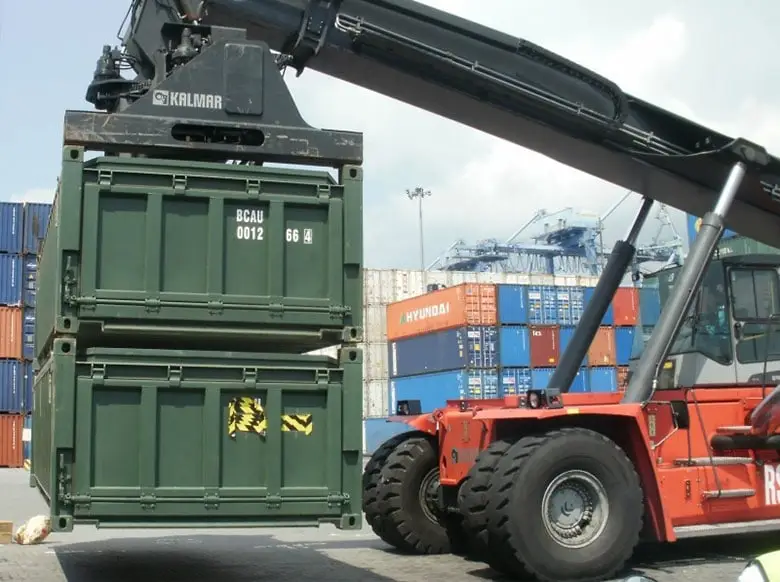
- Six sets of large loading and unloading fork handles, plus one pair of small fork pockets on the lid
- One set of heavy lift and one set of empty fork pockets at the base
- Front discharge hatch and rear barn doors for fast discharge by opening and tipping
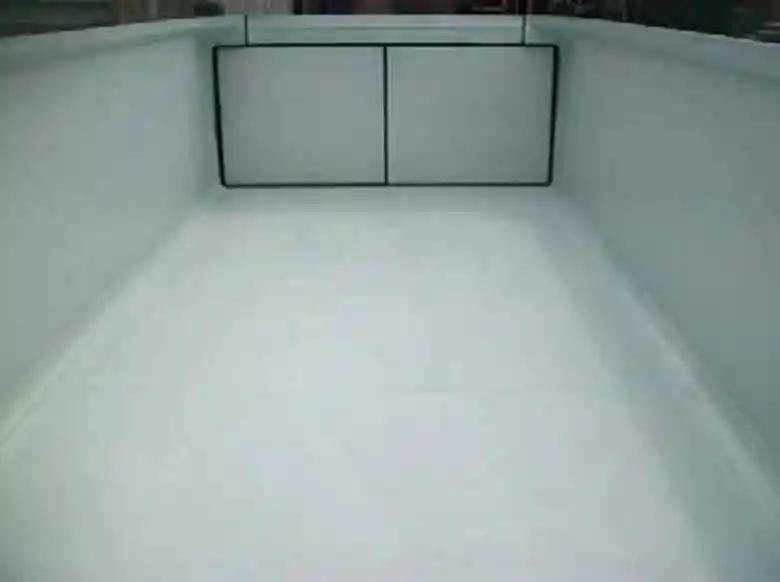
- Tapered smooth inner walls running down to a coved edge at the floor, so material releases cleanly
Half height, or full height?
A half height container justifies itself whenever weight fills the box before volume does. Ore, concentrate, sand and drill cuttings all reach maximum payload while a standard container is still part empty, so cutting the side walls down only removes room that was never going to be filled — and loading, sheeting and tipping all become easier and safer for it. Put another way: if you are consistently closing the doors on a half-empty full-height container, you are paying to move air and fighting an unnecessarily high loading edge. If you are moving lighter bulk goods, the reverse applies and a full-height open top is the better buy.
Why the coved interior matters
Tapered smooth inner walls and a coved wall-to-floor edge are not a finish detail on a bulk container. Square internal corners trap damp concentrate and fines, which then have to be dug out by hand and which distort the tare weight over time. A coved edge lets the load release cleanly on tipping, which keeps cycle times down and keeps the weighbridge honest.
Delivery and cover
Delivery is free anywhere in the UK, including Northern Ireland, the Isle of Man, Jersey and Guernsey, and the price shown is the total payable, with no VAT added at checkout. These are among the easiest units in the catalogue to deliver: at 1.45 m tall the low profile removes the overhead clearance problem entirely, and the 6.06 m length with a 2,530 kg tare suits a rigid tilt-bed rather than an articulated vehicle. What still matters is the ground, because a half height loaded to 38,000 kg gross imposes a very high point loading through its corner castings — the standing area needs to be genuinely load bearing, not merely level. Where a crane or HIAB offload suits the site, that is agreed in writing before delivery. As new units these carry 12 months’ cover against structural defects and water ingress. Separately you have 14 days to change your mind under the Consumer Contracts Regulations 2013, and a distinct 30-day right to reject the goods if they are faulty under the Consumer Rights Act 2015.
Related bulk-handling units
Lighter bulk goods are still better served by a full-height open top container with bows and tarpaulin. Where the bulk has to be enclosed, the usual answer is a 20ft top-loading dry bulk container. Offshore work that has to carry lifting certification calls for the 10ft DNV 2.7-1 half height container. Everything else of this type sits under open top containers; alternatively send us your material and tonnage and we will recommend one.
Reviews
There are no reviews yet.