
Description
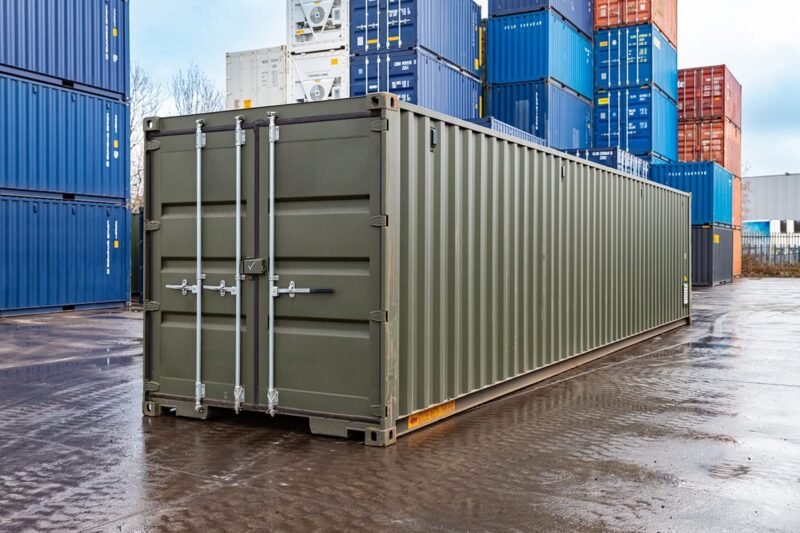
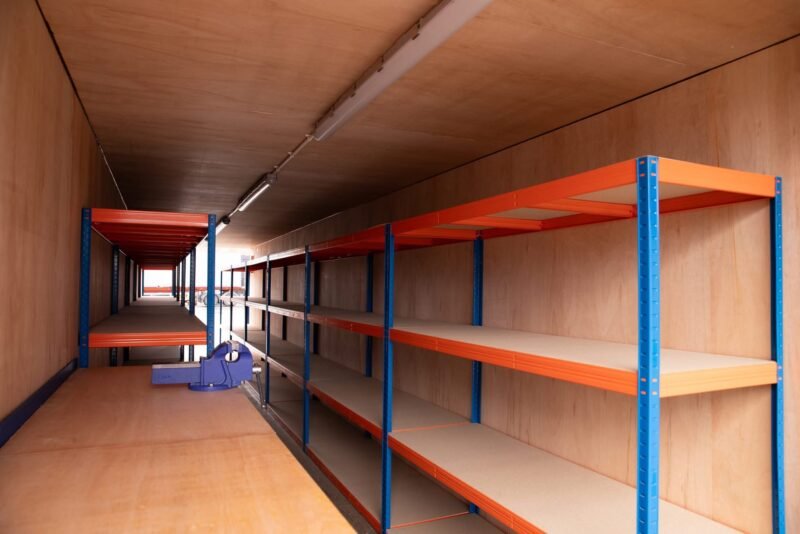
A 40ft tunnel container fitted out as a working workshop: double cargo doors at both ends, heavy-duty benching, industrial racking, a full electrical installation with LED lighting, and an insulated, lined interior. It is bought by operations that need a maintenance bay where there is no building to put one in — long-running civils and highways contracts, renewable energy sites, remote depots. With the fit-out already installed, the unit earns its keep as soon as it is sited and connected to a supply.
Dimensions
- External: 12.19 × 2.44 × 2.59 m (40 ft 0 in × 8 ft 0 in × 8 ft 6 in)
- Internal, before lining: approximately 12.03 × 2.35 × 2.39 m (39 ft 6 in × 7 ft 9 in × 7 ft 10 in)
- Door opening, each end: 2.34 × 2.28 m (7 ft 8 in × 7 ft 6 in)
- Insulation and lining reduce the internal figures — allow for it when planning bench runs
What is installed
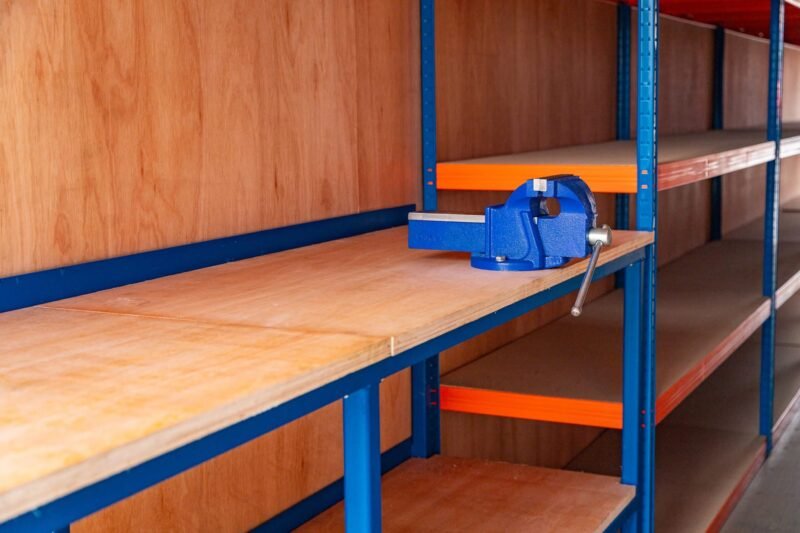
- Heavy-duty workbenches built for intensive manual work, maintenance, repairs and fabrication
- Industrial racking for tools, parts and equipment, organised and secured
- Full electrical fit-out and LED lighting — internal wiring, sockets and lighting for safe working day or night
- Insulated and lined interior for temperature stability and year-round use
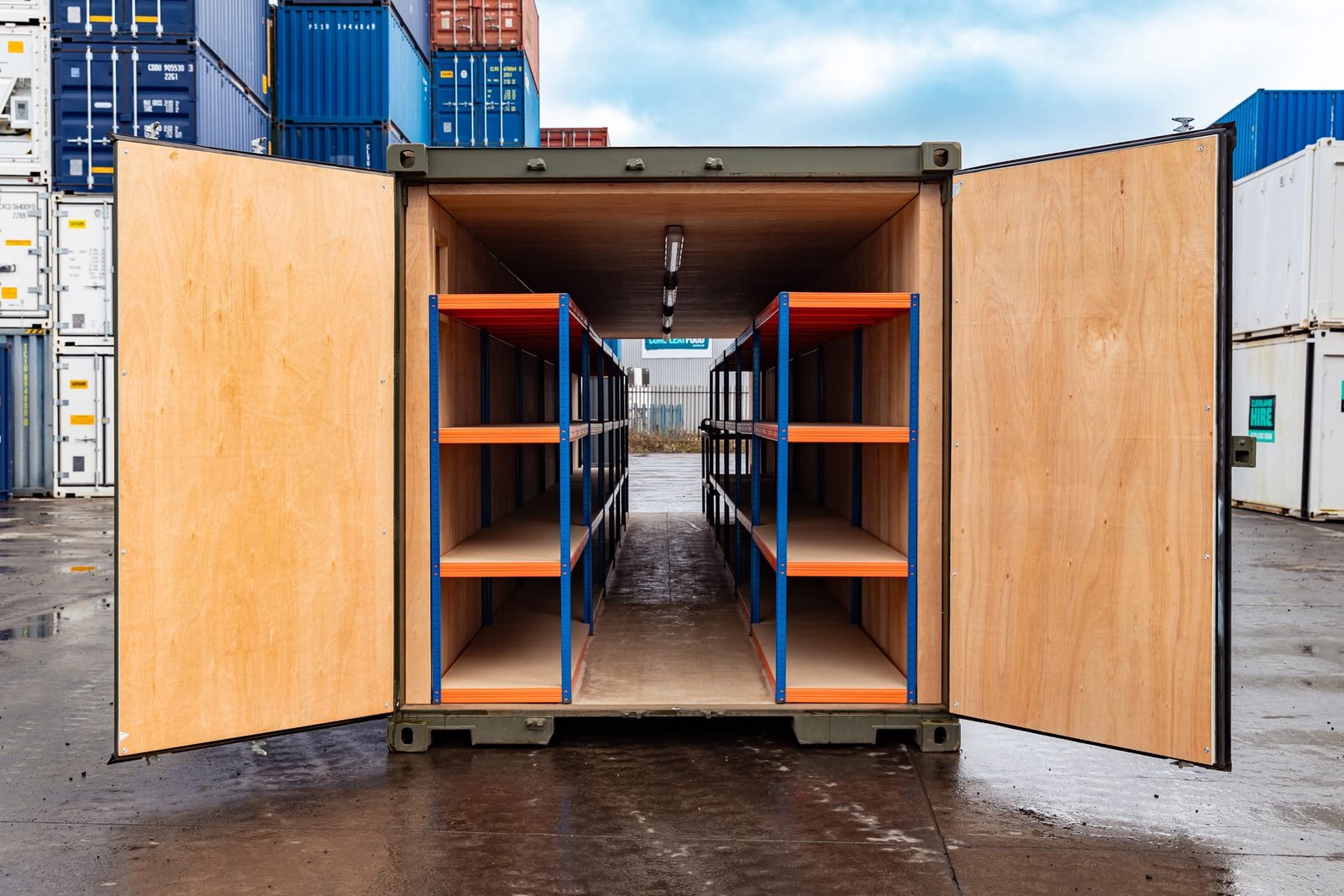
- Double cargo doors at both ends — the tunnel layout
Why the tunnel layout matters in a workshop
A standard container gives a crew one working face and a dead end. A tunnel gives two, and that changes how the space is used:
- Long stock, pipe and profile feed straight through instead of being manoeuvred inside a closed box
- Two open ends create genuine cross-flow ventilation for grinding, cutting and light welding
- Benches can be arranged as a linear run — receive at one end, finish at the other
- The unit can sit against a fence or another container on one side and still be fully usable
Where these end up
Contractors use fitted tunnel workshops as a lock-up maintenance bay on long civils and highways jobs. Wind and solar operators use them as field service points for turbine and inverter spares. Yards use them as a fixed repair station that can be relocated when the layout changes. The common thread is that the alternative — a temporary building, or driving parts back to a main depot — costs more in lost time than the container does.
Delivery, siting and cover
Delivery is free UK-wide, including Northern Ireland, the Isle of Man, Jersey and Guernsey, and the price shown is the total payable with no VAT added at checkout. A 40ft unit is the least forgiving size to site: it arrives by articulated lorry, needs a long straight approach, and cannot realistically be shuffled into position afterwards. Both ends need door-swing clearance, which is easy to forget on a tunnel container — the whole benefit is lost if one end is blocked. Firm, level ground matters because a 40ft shell placed on ground that settles unevenly will rack, and racked doors do not close. Where the pitch can only be reached by crane, that is agreed in writing before delivery. Check the delivery and site access requirements before ordering.
The fit-out carries 12 months on workmanship and the shell 12 months against structural defects and water ingress. Separately, you have 14 days to cancel under the Consumer Contracts Regulations 2013 and a 30-day right to reject faulty goods under the Consumer Rights Act 2015.
Compare and configure
Each workshop build is quoted on its own, so tell us the bench layout, socket positions and racking runs you need. Compare it first against the rest of our modified container conversions. Prefer to specify the interior yourself? Begin with a bare 40ft one-trip tunnel container with double end doors. Where 40ft is more yard than you can give up, the 20ft workshop container does much the same job over half the length. Request a quote with your requirements.
Reviews
There are no reviews yet.